Enliven Logo

Hello, you are using an old browser that's unsafe and no longer supported. Please consider updating your browser to a newer version, or downloading a modern browser.

Spring Window Boxes in Old City and Society Hill: Philadelphia’s Colonial Tradition in Bloom

  • Blog
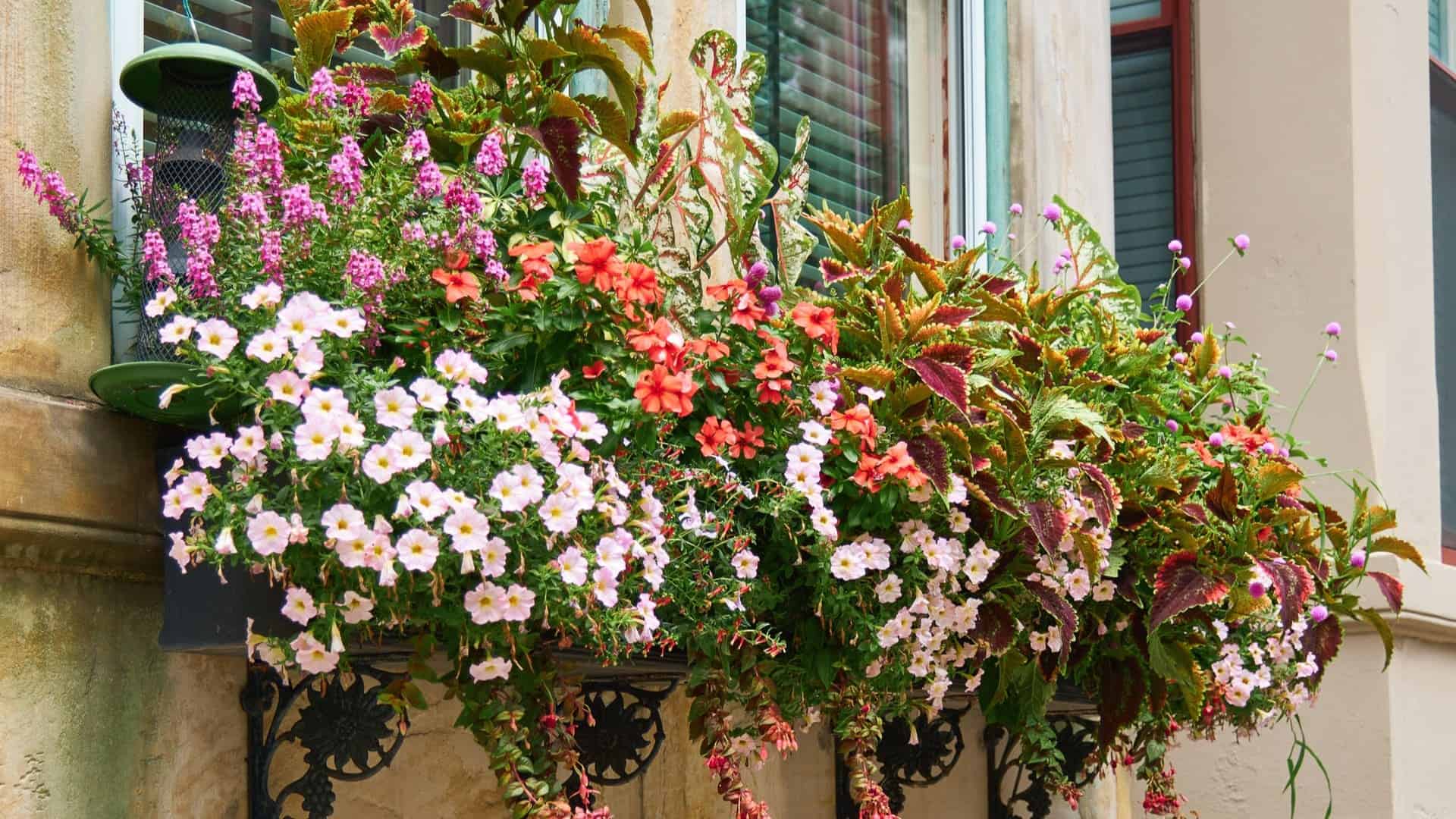
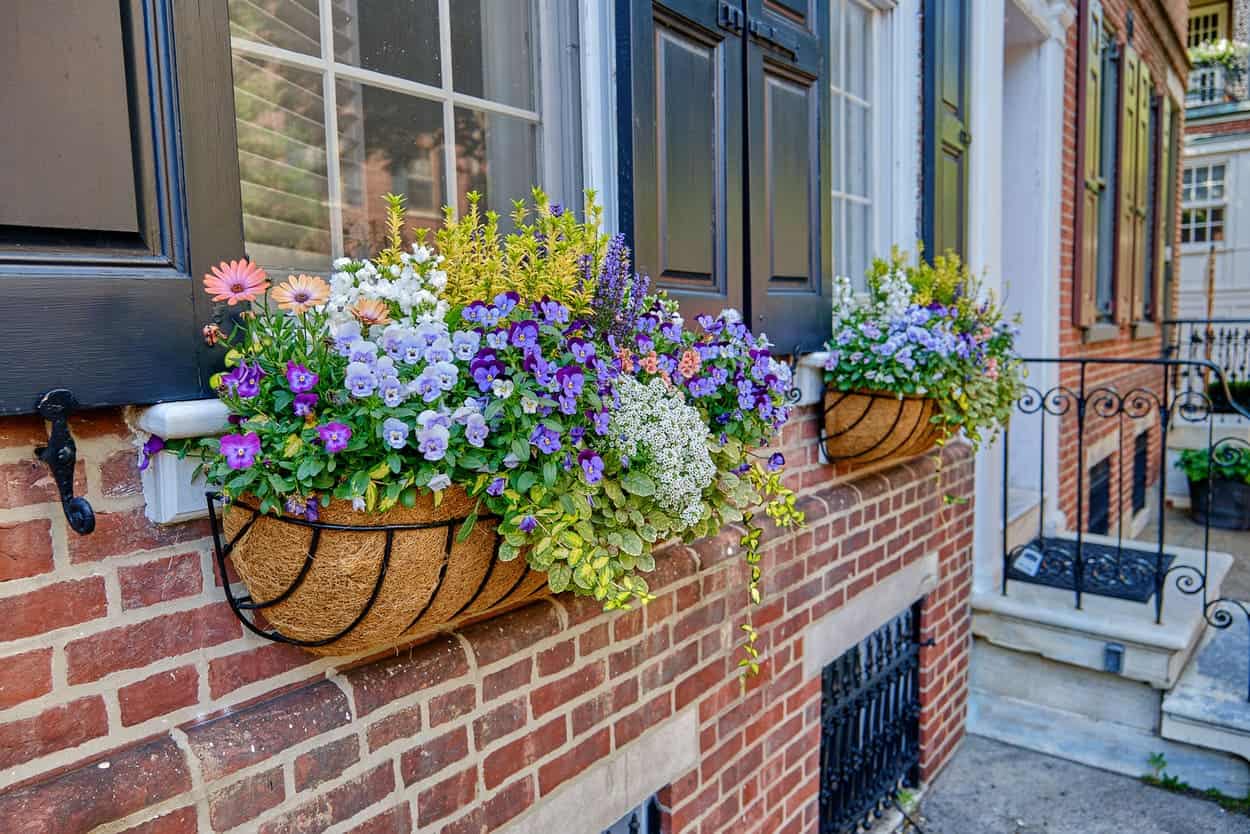
Brick townhouse with window flower boxes filled with vibrant purple, white, and pink blooms. Black shutters add contrast, creating a charming, lively scene.

Spring Window Boxes in Old City and Society Hill: Philadelphia’s Colonial Tradition in Bloom

Window boxes may feel decorative today, but in Philadelphia, they began as something much more essential. 

In colonial cities like Philadelphia, Boston, and Williamsburg, window boxes were practical, hardworking elements of daily life. Long before modern sanitation or air filtration, early urban environments were crowded, noisy, and often unsanitary. Homes were built close together, streets were narrow, and fresh air was precious. 

Window boxes—filled with fragrant herbs, flowering plants, and greenery—were placed beneath windows to help filter unpleasant odors, improve air quality, and bring nature closer to daily life. In many ways, Philadelphia and other colonial cities became the birthplace of the window box tradition we still cherish today. 

Nowhere does that history feel more alive than in Old City and Society Hill. 

Colonial Architecture That Shaped a Tradition 

Old City and Society Hill are some of Philadelphia’s most historically intact neighborhoods, home to brick residences built during the 18th century, many dating back 

to Colonial America and the Revolutionary era. Cobblestone streets, symmetrical façades, multi-pane windows, shutters, and paneled doors define the neighborhood’s timeless character. 

These homes were designed with proportion and intention—and window boxes were a natural extension of that design. Even centuries later, it’s easy to imagine early residents opening their windows to let in fresh air scented with herbs and flowers growing just outside. 

Planting Philadelphia window boxes here feels less like adding something new and more like continuing a tradition. 

Traditional Window Boxes and Historic Color Palettes 

Today, many of our Old City and Society Hill clients live in historic homes, and our approach to planting reflects that responsibility. The most common installation here is a traditional wooden window box, carefully painted to match the historic colors of the home. 

It’s common to see doors, shutters, and window boxes all painted in the same thoughtfully selected shade—soft blues, pale greens, muted yellows, warm creams, and gentle pastels that feel true to the period. In spring, these paired window boxes become one of the defining visual elements of the neighborhood. 

Pastel seasonal plantings soften the brick façades and frame the windows, echoing the colors of early spring while honoring the restrained elegance of colonial design. 

Spring Planting Among Revolutionary History 

While planting in Society Hill, it’s impossible not to slow down. The craftsmanship of these homes—the brickwork, iron details, and aged stone—invites attention. With Independence Hall and other Revolutionary landmarks just steps away, the neighborhood still carries the energy of early American city life. 

It isn’t hard to imagine the sights and sounds that once filled these streets: footsteps on cobblestone, voices drifting through open windows, the everyday bustle of a young city finding its rhythm. 

Spring window boxes add a living layer to that history—reminding us that plants have always been part of how people experienced their homes.

A Living Link to Philadelphia’s Past 

In Society Hill, Philadelphia window boxes are more than decoration. They are a living link to the city’s colonial past—rooted in practicality, elevated by beauty, and sustained by tradition. 

Our goal is always to design window boxes that feel appropriate, timeless, and deeply connected to the architecture they serve. Simple. Balanced. Seasonal. 

In spring, when pastel plantings frame brick homes along cobblestone streets, Society Hill shows us that some ideas are worth carrying forward—century after century.
Why Mixed Containers Work — and What Really Makes Them Last

  • Blog
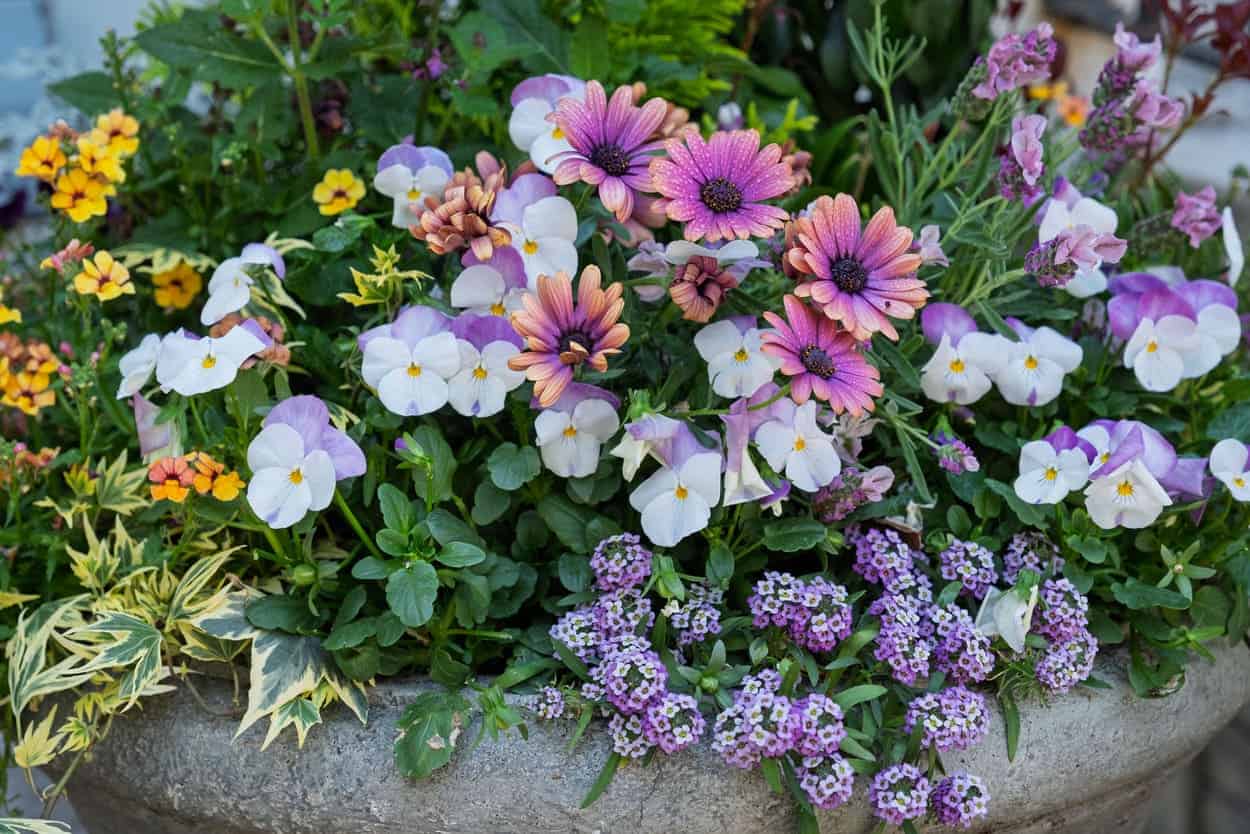
A vibrant garden planter with purple daisies, white and yellow pansies, and clusters of small purple flowers. Lush greenery frames the cheerful display.

Why Mixed Containers Work — and What Really Makes Them Last

A great container isn’t built on a single moment of color.

At Enliven, we’ve spent more than a decade refining mixed container designs—iterating on thousands of planters every season. What we’ve learned is simple: the containers that stand out visually are almost always the ones designed to perform over time, not just look good the day they’re planted.

This post is a look behind the scenes at how we think about container gardening—and why a well-designed mixed container is so much more than “that looks colorful right now, let’s plant it.”

What Makes Mixed Containers Visually Strong

Mixed containers work because they create contrast and rhythm.

Instead of relying on one type of plant or one burst of bloom, strong containers layer: 

  • Different foliage sizes and textures
  • Upright, mounding, and trailing growth habits
  • Plants that peak at different points in the season

The result is depth. Your eye moves through the container instead of landing on one flat plane of color.

When done properly, mixed containers feel intentional from every angle—and they continue to evolve as the season progresses.

Why Mixed Containers Last Longer

Longevity is where thoughtful container design really shines.

A container made entirely of plants chosen for peak bloom often looks incredible for about a week. Once those blooms fade or cycle out, the container loses its structure and energy.

Mixed containers are designed with:

  • Structural plants that anchor the arrangement
  • Foliage plants that hold their form all season
  • Blooming plants that come in waves

If one plant slows down, another picks up the slack. The container never fully drops off. That’s not an accident—it’s planning.

Ten+ Years of Testing (So You Don’t Have To)

At Enliven, we focus exclusively on container gardening. That gives us a rare advantage: we’re not tied to any single breeder, grower, or formula.

Over the years, we’ve tested just about every variable you can imagine:

  • Full-sun roof decks hitting 100+ degrees
  • Deeply shaded, north-facing porches
  • Customers who water daily—and customers who leave for the shore every weekend
  • Irrigated containers, self-watering containers, and hand-watered pots
  • Dozens of soil blends
  • Hundreds of plant varieties, sizes, textures, and growth habits

If there’s a factor that affects container performance, we’ve likely tested it—often more than once.

Performance Comes First (Beauty Follows)

We don’t start with bloom color. We start with plant behavior.

Before a plant earns its place in an Enliven container, we look at:

  • How it grows over time
  • How it responds to heat, stress, and inconsistent watering
  • How it pairs with other plants
  • Whether it holds its shape or collapses mid-season

Only then do we refine color palettes, textures, and combinations.

A well-planted container works like an orchestra: there are moments for solos, slow builds, and full crescendos—then quieter passages that let the design breathe. When done right, the container ebbs and flows instead of peaking once and fading fast. 

Why DIY Container Gardening Can Be Tough 

I still remember my first container arrangement. It was… bad.

And that’s not because I didn’t care—it’s because most beginner gardeners (and honestly, many professionals) are taught to shop with their eyes in the moment.

Garden centers and big box stores are filled with plants bred and grown to look perfect during a very specific window. Many are essentially raised in laboratory-like conditions: controlled light, precise fertilization, ideal temperatures, and perfect watering schedules.

Then they’re taken home—and dropped into the wild.

Suddenly they’re dealing with:

  • Irregular watering
  • Little to no fertilizer
  • Rain, wind, heat waves, and cold snaps
  • Sun exposure that doesn’t match their preference

It’s no wonder so many containers disappoint after a week or two.

The Problem With “Instant Color” Containers

Pre-made baskets and single-variety mixes (three colors of petunias, for example) are designed to sell at peak bloom—not to perform long term.

They often:

  • Look their best the day they leave the greenhouse
  • Decline quickly once blooms fade
  • Lack structure once flowering slows
  • Never regain the impact they had at purchase

There’s nothing wrong with choosing a healthy plant—but great container design asks you to look beyond the bloom.

Designing for the Whole Season

The most effective containers are built around:

  • Foliage first
  • Structure second
  • Blooms as accents, not the foundation

When you design this way, containers become more forgiving, more resilient, and far more satisfying to live with.

That’s the difference between cobbling together plants based on what looks good today— and building a container that still looks intentional six weeks from now.

Ride Along With Us

This blog is an invitation behind the scenes.

We want you to understand why Enliven containers work, not just admire the finished result. Whether you’re a client or a DIY gardener, our goal is to share the principles that make container gardening more successful—and far less frustrating.

Because when you design for performance first, beauty follows naturally. And that’s when containers truly come to life.

A Brief History of Winter Wreaths and Garland — and Why We Still Adorn Our Doorways Today

  • Blog
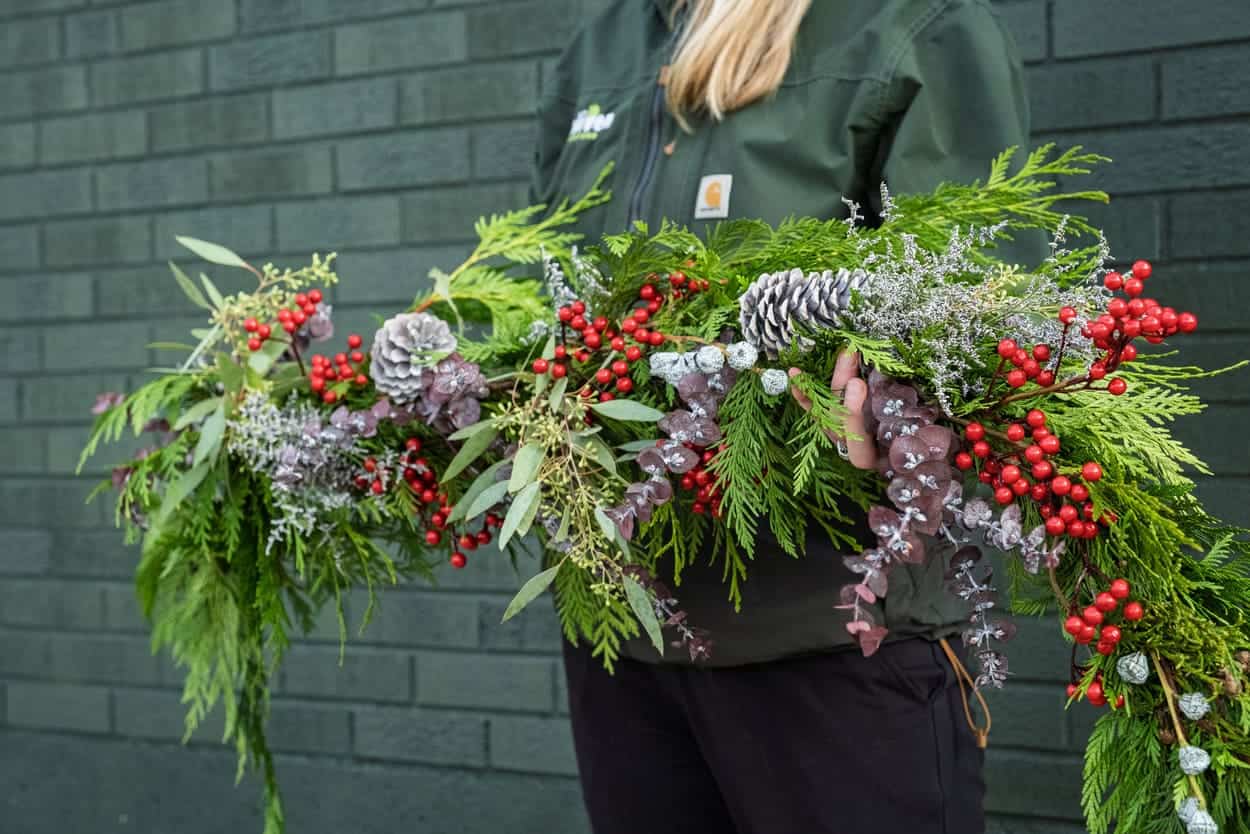
A person in a green jacket holds a festive garland with pine branches, red berries, silver pinecones, and green foliage against a dark green brick wall.

A Brief History of Winter Wreaths and Garland — and Why We Still Adorn Our Doorways Today

Adorning doorways with wreaths and garland is one of the oldest winter traditions in the world. Long before these elements became associated with any single holiday, they were used across cultures as symbols of endurance, hospitality, and hope during the darkest months of the year.

Today, winter wreaths and garland remain a timeless way to mark the season—bringing nature, warmth, and intention to the front of the home when the landscape itself feels quiet and dormant.

The Ancient Origins of Winter Greenery

The use of evergreen materials in winter dates back thousands of years and spans multiple regions of the world.

In ancient civilizations—including those in Europe, the Mediterranean, and parts of Asia—evergreens were revered for their ability to stay green when everything else faded. Pine, fir, cedar, laurel, and other greens were woven into wreaths and garlands and placed on doors, gates, and gathering spaces to represent:

  • Continuity and renewal
  • Protection and good fortune
  • The turning of the seasons

The circular wreath became a powerful symbol of life’s cycles and the promise of spring’s return.

Northern Europe and the Rise of the Winter Wreath

The winter wreath as we recognize it today took shape primarily in Northern and Central Europe, where winters were long, cold, and unforgiving.

In these regions, evergreen branches were gathered and hung over doorways and windows to:

  • Bring the forest indoors
  • Signal warmth and welcome
  • Celebrate resilience during winter

Garland was used similarly—draped along entryways, beams, and railings to soften architecture and add texture during an otherwise stark season.

These traditions traveled with European settlers to North America and quickly became part of early American winter customs.

Wreaths and Garland in Early America

In colonial America, wreaths and garlands were simple, practical, and locally sourced. Materials were foraged rather than purchased, and designs were restrained and seasonal rather than decorative for decoration’s sake.

As American design evolved—particularly during the Victorian era—wreaths became more elaborate, incorporating cones, berries, dried materials, and layered greenery. Over time, wreaths shifted from purely symbolic objects to design statements that reflected craftsmanship, taste, and care for the home.

How Wreath Design Has Evolved

Like all design, wreaths have evolved with cultural values and aesthetics.

  • Early designs emphasized simplicity and symbolism
  • Mid-century designs leaned toward mass production and novelty
  • Modern wreaths have returned to natural materials, thoughtful composition, and longevity

Today, the most enduring winter wreaths prioritize texture, proportion, and materials that age gracefully through cold, wind, snow, and freeze–thaw cycles.

Winter Wreaths and Garland in Modern America

In modern American homes, wreaths and garland are no longer limited to a single moment or holiday. They are now seasonal design elements, often installed in November and intended to look beautiful through winter.

The most common types of winter wreaths include:

  • Evergreen wreaths made from fir, pine, and cedar
  • Mixed evergreen and berry wreaths
  • Preserved eucalyptus wreaths
  • Minimalist winter wreaths using twigs, cones, and natural accents

Each year, tens of millions of wreaths are sold in the United States, with evergreen wreaths remaining the most popular choice due to their durability, fragrance, and timeless appeal.

A Tradition That Still Matters

A wreath on the door is often the first impression of a home in winter. It signals intention, hospitality, and respect for seasonality. Garland does the same—softening architecture and adding warmth when landscapes are bare.

These elements endure not because they are trendy, but because they are deeply rooted in human instinct: to bring life and beauty to the home when nature feels still.

How We Carry the Tradition Forward at Enliven

At Enliven, winter wreaths and garland are a cornerstone of our seasonal work.

Each year, we design and create dozens of custom wreaths and hundreds of feet of winter garland for our customers. Every piece is thoughtfully composed using high-quality winter materials selected for durability, proportion, and longevity—so they look just as intentional in February as they did in December.

This work draws on centuries of tradition, years of experimentation, and a deep respect for winter as a design season in its own right.

Winter may be quiet—but it’s never without beauty when it’s designed with care.

Winter Planters and Window Boxes: Designing Arrangements That Survive Everything

  • Blog
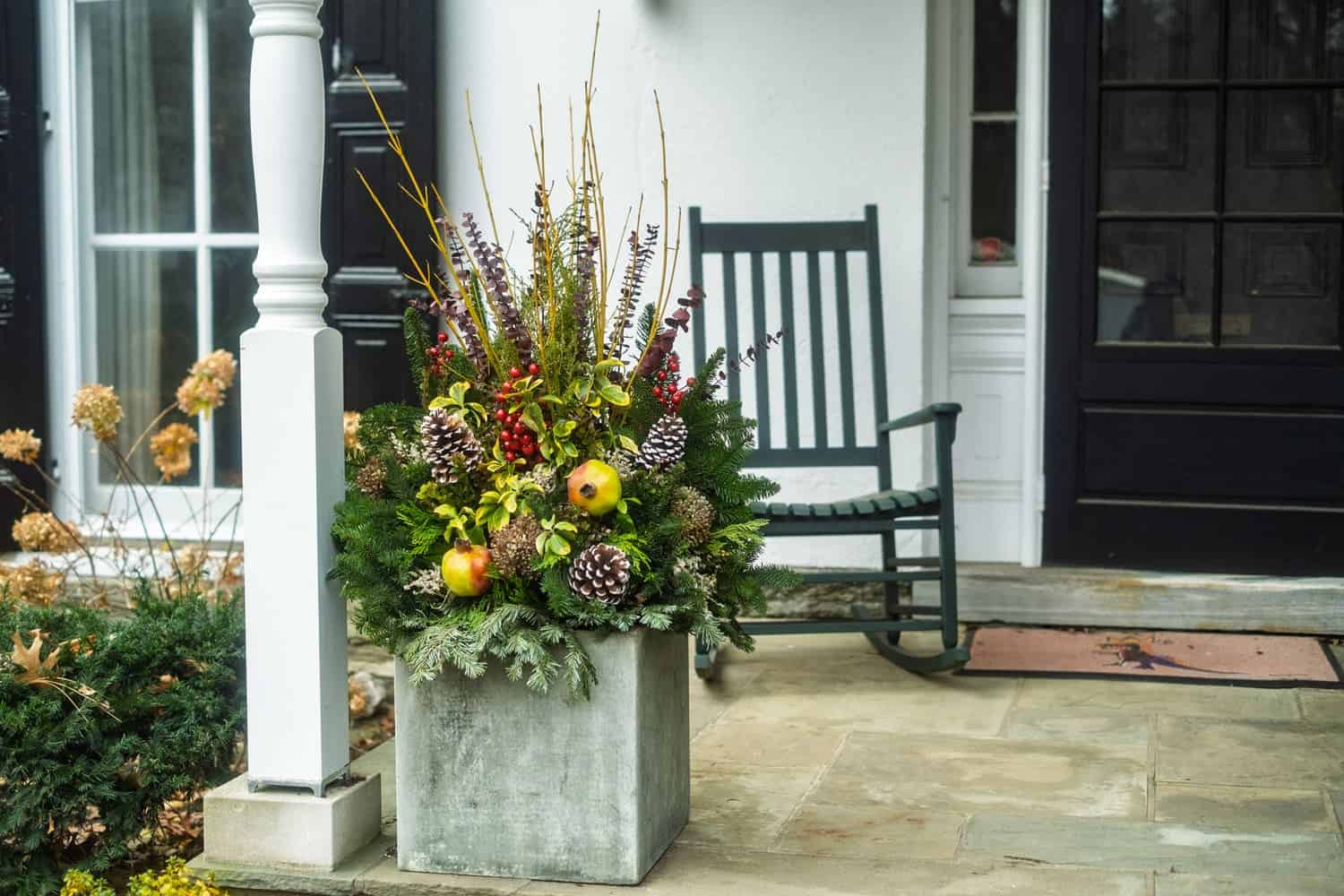
Decorative porch scene with a concrete planter filled with winter foliage, pinecones, and ornaments beside a dark green rocking chair on a stone patio.

Winter Planters and Window Boxes: Designing Arrangements That Survive Everything

Winter is our most unique season—and without question, our most challenging.

In spring, summer, and fall, we work with living plants fresh from greenhouses and growers’ fields. Winter, especially here in Philadelphia, is a completely different animal. This season demands a deeper level of planning, material knowledge, and experience than any other time of year. We use cut and preserved materials rather than living plants.

We begin planting winter arrangements in November, and they need to remain beautiful until March. That’s four months of exposure to just about every condition imaginable: 60-degree days followed by sub-zero nights, relentless wind, snow and ice, heavy rain, harsh winter sunlight, and endless freeze–thaw cycles that punish both plants and materials.

This winter has been a perfect reminder of why winter design is where true expertise shows.

Fifteen Winters of Lessons (Learned the Hard Way)

Over the last 12 years at Enliven, we’ve experienced every version of winter you can imagine.

We’ve planted in T-shirts and jeans during the first week of December, sweaty and muddy as if it were June. We’ve also planted with pick axes, hand warmers, and heavy winter coats, breaking through soil frozen into solid blocks of ice. We’ve seen February hit 80 degrees (2018 still stands out), and we’ve worked through stretches of bitter negative temperatures.

Our winter arrangements have to be ready for all of it—because winter is unpredictable.

First Impressions Matter—But So Does Longevity

Winter arrangements serve a unique dual purpose.

First, they’re often the first impression of the holiday season. This is the most common time of year for hosting guests, and people want their homes looking polished and intentional before company arrives.

At the same time, those arrangements must age gracefully. There’s nothing worse than a display that screams “holiday décor left up too long.” The goal is to strike a balance: festive enough for December, timeless enough to still look appropriate in February.

That balance comes down to materials—and knowing exactly how they behave over time.

The Backbone: Evergreen Boughs Built for Winter

Our winter designs begin with cut and preserved evergreen boughs sourced from the Pacific Northwest. We primarily use noble fir and silver fir, sustainably harvested high in the mountains of Oregon and cut fresh for the season.

These boughs are dipped in an organic tree resin that helps preserve both color and moisture content for as long as possible. This isn’t guesswork—we’ve spent over a decade experimenting with suppliers and methods to find what truly performs best through freeze–thaw cycles.

Supporting greens include:

  • Huckleberry, with brilliant orange, red, and green foliage on rich red stems
  • Oregonia, offering creamy whites, golds, and greens
  • Incense cedar, with soft yellow tips
  • Variegated and coned cedar
  • Blue-berried juniper
  • Carolina sapphire cedar, prized for its striking powder-blue foliage. Each material is chosen not just for beauty, but for how it ages outdoors.

Texture, Height, and Structure: Cones, Eucalyptus, and Dried Florals

Pine cones are harvested during the warm summers in the forests of North Carolina and stored specifically for winter use. They add texture, scale, and a sense of seasonality without degrading over time.

Eucalyptus is cut and preserved along the warm California coast, harvested at the precise moment when new growth has hardened off. This timing is critical. Preserved correctly, eucalyptus can be dyed deep, rich tones that add height, movement, and depth to winter designs.

We also incorporate dried flowers grown up and down the West Coast. These bring a light, airy quality and a floral softness—often in whites and creams—that lasts the entire season without collapsing or discoloring.

Twigs That Stop You in Your Tracks

Brilliantly colored twigs are one of the easiest ways to add color and height to an arrangement.

Harvested just after leaves drop in October, we use dozens of varieties: curly willow, red twig dogwood, yellow dogwood, and more. Most are cut in the Upper Peninsula of Michigan and parts of Ontario, where cold conditions produce strong color and structure.

These elements create height, drama, and architecture—giving winter arrangements presence even when viewed from a distance.

Why We Use Artificial Berries (And Why That’s Intentional)

Fresh berries are beautiful—but in practice, they’re unreliable.

Over the years, we learned that farm-grown fresh berries come with major drawbacks: 

  • Limited color variety compared to what exists in nature
  • Unpredictable harvests due to weather and bird damage
  • Shipping losses that could exceed 50% of the product
  • Freeze–thaw cycles that cause berries to blacken or drop
  • Birds stripping arrangements bare during cold winters

Rather than fight nature, we designed a better solution.

We develop our own artificial berries to mimic what we see outdoors. We work with artists and designers to refine size, branching patterns, berry shape, color, sheen, and density. Every year, we improve this collection—expanding our library so it feels natural, intentional, and timeless.

A Season That Starts a Year in Advance 

All of these elements come together in our winter arrangements—but the work begins long before November.

Winter design is a year-long endeavor: testing materials, refining suppliers, improving techniques, and learning from every season. It’s demanding, unforgiving work—but when everything comes together, the results speak for themselves.

Winter may be the harshest season, but it’s also the one that best reveals creativity and craftsmanship. And after 12 winters, it’s one we’ve learned to respect—and design for—better than ever.

Spring on Delancey Place: Philadelphia Window Boxes Rooted in History

  • Blog

Spring on Delancey Place: Philadelphia Window Boxes Rooted in History

There are few streets in Philadelphia where window boxes feel as essential as the architecture itself. Delancey Place is one of them.

Nearly fifteen years ago—long before Enliven Planters existed as a business—this was one of the places we wandered while imagining what seasonal planting in the city could be. At the time, Delancey Place was one of the rare areas in Philadelphia where beautiful window boxes were already part of the streetscape. Spring after spring, these blocks proved how much life, color, and warmth thoughtfully planted window boxes could bring to a neighborhood. 

We wanted to take that feeling and spread it throughout the city. 

Today, we’re proud to maintain dozens of Philadelphia window boxes and planters along these same historic blocks. 

Architecture That Invites Planting 

Developed largely in the mid-to-late 19th century, Delancey Place is defined by tall, gracious townhouses built to last. The homes sit slightly back from the street, creating a sense of openness and calm. Many living spaces begin a half-story above street level, reached by wide marble steps—often still accompanied by original boot scrapers from the days of horse-drawn carriages. 

Bay windows are everywhere here, projecting outward and catching the light. From a planting perspective, they’re a gift. These bays naturally lend themselves to three window boxes wrapping the façade, allowing us to create layered, architectural compositions that feel substantial without overwhelming the home. 

This is Philadelphia architecture that welcomes window boxes—not as decoration, but as an extension of the building itself.

Spring Window Boxes on Delancey Place 

Spring is when Delancey Place truly comes alive. 

Cherry trees lining the street bloom in soft pinks, and on a breezy day their petals fall gently through the air, like snow drifting between brick façades and iron railings. It’s fleeting, emotional, and unmistakably Philadelphia. 

Our spring window boxes are designed to echo that moment. Seasonal plantings emphasize movement, texture, and a restrained color palette that complements the historic homes—never competing with them. We design many of these installations in custom wrought iron window boxes, crafted by local Philadelphia metalworkers and artists. No two are alike, just like the homes they’re attached to. 

The result is planting that feels timeless, grounded, and deeply place-specific.

Where Enliven Planters Began 

Delancey Place didn’t just inspire our aesthetic—it helped shape our mission. 

Seeing so many well-loved Philadelphia window boxes on these blocks showed us what was possible. It made clear how seasonal planting could transform not just a single home, but an entire street. Enliven Planters was born from the idea that this kind of beauty shouldn’t be limited to a few historic blocks—it should be accessible throughout Philadelphia. 

Every spring installation we create here is both a continuation of that tradition and a quiet thank-you to the street that helped start it all. 

When the cherry blossoms return and the window boxes fill out, Delancey Place reminds us why we plant: to honor history, celebrate seasonality, and bring lasting beauty back to the streets we love.

A Career in Bloom: An Interview with Renae Bergh

  • Day in the Life

At Enliven, passionate individuals like Renae Bergh make the organization thrive. With over three years of dedication, Renae’s journey from corporate product management to becoming Enliven’s Operations Manager is an inspiring tale of growth and transformation. Recently, Renae shared insights about her role, career transition, and love for plants with us.

A Leap into Green

Tell us a little about yourself.
“My name is Renae Bergh, and I’ve been at Enliven for just over three years. I started in the gardening department, moved into production management, and now serve as the Operations Manager.

Previously, I worked in corporate product management for 12 to 13 years. I needed a change of pace and wanted to work with plants, so I took a leap of faith, applied for a gardening position at Enliven, and never looked back.”

From Corporate to Cultivating Joy

How was the career shift?
“It was definitely scary at first, leaving a long-standing career for something entirely new. But it turned out to be one of the best decisions I’ve ever made. Working with plants and seeing tangible results has been incredibly satisfying.”

A Blooming Work Environment

What’s your favorite part about working at Enliven?
“Hands down, the people. Sure, working with plants and being outside is great, but it’s the positive, hardworking team here that makes it truly enjoyable. A strong, supportive work culture makes all the difference.”

The Magic of Winter

Do you have a favorite season at Enliven?
“Winter is special to me. We kick off the holiday season in mid-November with stunning arrangements that have an instant impact. There’s nothing like the smell of winter greens—pinecones, eucalyptus, and berry elements come together to create visually stunning displays that feel like the holidays.”

Lessons in Leadership

What skills have you learned during your time here?
“I’ve learned so much about gardening—from planting and pruning to creating beautiful arrangements. Transitioning to management taught me to lead rather than do. Learning to manage and inspire a team has been a continuous process, and I’m still fine-tuning my approach.”

Plant Wisdom

Do you have any plant care tips to share?
“Lighting is key! It determines how much water a plant needs. More light means more water, and less light means less water. Getting this balance right is crucial for plant health. I always recommend using a moisture meter to avoid over- or under-watering.”

A Favorite Among Many

Do you have a favorite plant?
“That’s tough to answer, but I do love ZZ plants. We used them in our summer arrangements, and now several of them are happily thriving in my apartment.”

Renae’s journey is a testament to the rewards of pursuing your passion and embracing change. Whether managing teams or curating breathtaking plant arrangements, she continues to nurture both her own growth and that of Enliven.

Learn more about our seasonal planter arrangements here.

Day in the Life: Enliven’s Lead Gardener

  • Day in the Life
Mitch Anderson, Lead Gardener at Enliven

A Day in the Life of Mitch Anderson: Enliven’s Lead Gardener

At Enliven, our gardens are not just beautiful spaces, but they are tended to by an incredible team of gardeners who bring their passion and knowledge to life. Today, our Social and Visual Media Coordinator, Mycie, had the chance to sit down with Mitch Anderson, Enliven’s Lead Gardener, to learn more about his role, his journey, and his love for plants.

Meet Mitch

Mycie: Hi Mitch, thanks for sitting down with us today! Can you introduce yourself to our readers?

Mitch: Of course! I’m Mitch Anderson, the Lead Gardener here at Enliven. I’ve been with the company since August 2020, so a little over four years now.

The Role of a Lead Gardener

Mycie: So, what exactly does your role as Lead Gardener entail?

Mitch: I do a lot of training with new hires and often head up our larger, multi-person projects. On the day-to-day, I make sure to stay productive and hit high numbers, especially on the bigger jobs.

Mycie: You’re known for being one of our most proficient gardeners.

Mitch: Haha, yes, for sure.

Favorite Parts of the Job

Mycie: What would you say is your favorite part about working at Enliven?

Mitch: One of the best parts is the constant opportunities to learn. Of course, I’ve learned a lot about plants, but I’ve also picked up so much from my coworkers, like how to handle different interpersonal situations. Enliven gives us the space to grow and continue learning, which I really value.

Learning Plant Facts & Tackling Invasive Species

Mycie: Speaking of learning, what’s one of the coolest things you’ve learned about plants while working here?

Mitch: That’s a tough one! I think learning about the propagation process has been really interesting. I’ve also become more knowledgeable about pest care, which has been super helpful since I’ve had my share of houseplant disasters.

Oh, and invasive species removal has been fascinating too. We deal with a lot of Japanese knotweed on our property, and learning how to tackle that beast has been both challenging and rewarding.

Getting Hands in the Dirt

Mycie: What’s your favorite part of the gardening process?

Mitch: Honestly, I just love getting my hands in the dirt. But I think the most satisfying part is stepping back after a job is done, especially when it’s a beautiful window box or a big planter. Seeing the final product and knowing the client is going to love it—that’s the best feeling.

Gardening in Every Season

Mycie: What’s your favorite season to garden?

Mitch: Definitely fall. I love the colors and the overall vibe of harvest season. The weather’s usually great, not too hot or cold. That being said, I also enjoy winter gardening—planting during the colder months feels different and exciting.

Exploring Philly’s Neighborhoods

Mycie: Is there a particular neighborhood or area you love working in?

Mitch: East Falls, for sure. It’s such a great neighborhood. I also love working in Fairmount, Fitler Square, and Society Hill. The historic feel of these areas, with cobblestone streets and old homes, adds to the charm of planting beautiful arrangements there.

And I can’t forget going down to the shore in May—it feels like a special occasion and marks the start of summer. It’s always fun hearing stories from coworkers about their favorite beach spots and family traditions.

Favorite Plants & Toughest Challenges

Mycie: Do you have any memorable stories from your time here, or a favorite arrangement you’ve worked on?

Mitch: Nothing too wild comes to mind, but I love working with built-in planter beds. They’re usually large and allow for a ton of variety. It’s like solving a puzzle, and the results are always stunning because of the sheer number of plants and textures we get to work with.

Mycie: Lastly, what are your favorite and least favorite plants to work with?

Mitch: That’s a tricky one. I love all our plants, but the most challenging ones are probably Cana lilies—they have crazy root systems that are tough to deal with. Same goes for lantanas. They smell great but are difficult to remove.

As for favorites, I’m a big fan of dahlias, though we don’t get them as often. I also love lobelia. It’s a trailing bloom with a beautiful blue color that’s rare in the flower world.

Wrapping Up

Mycie: Thanks so much, Mitch! This has been a great conversation, and we’ve learned so much about your role and passion for gardening.

Mitch: You’re welcome!

We hope you enjoyed this behind-the-scenes chat with Mitch Anderson. Stay tuned for more insights from our incredible team here at Enliven!

Schedule

A Free Phone Design Consultation

Please fill out the form below to set up a free design consultation. Consultations are done over the phone and typically last 10-15 minutes. During the call we will discuss your planting needs, gauge your design preferences, and explain how our process works.

Currently Serving the Greater Philadelphia Area