
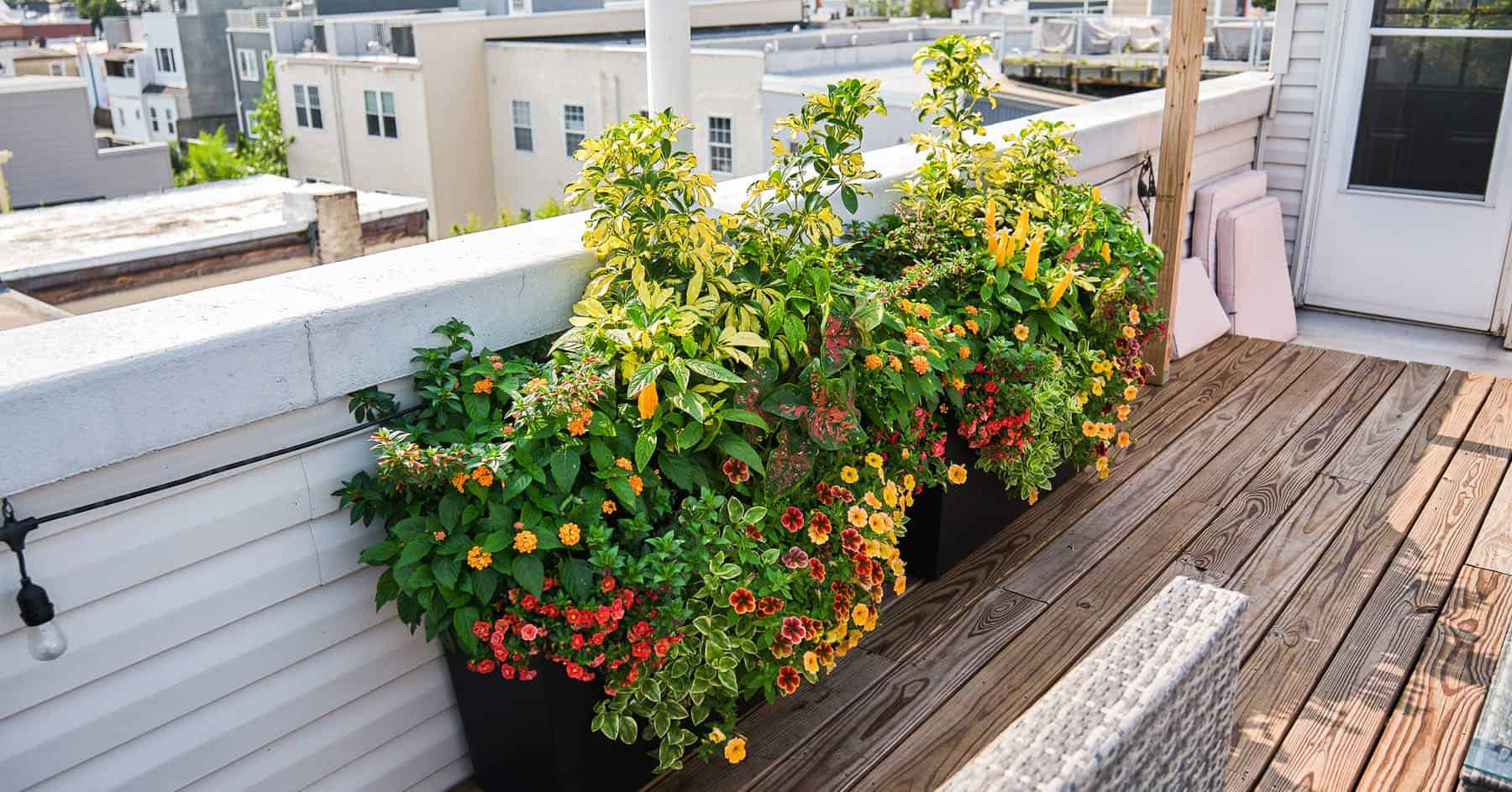
Summer in Philadelphia can be hot.
Temperatures regularly climb into the 90s, and several days each year may reach or exceed 100 degrees. For plants growing in window boxes and containers, the conditions can feel even more extreme.
Brick, concrete, asphalt, stone, and other hard surfaces absorb heat throughout the day and release it slowly. This urban heat island effect can raise the temperature around a planter well above the official air temperature—especially on sunny sidewalks, rooftops, patios, stoops, and south-facing façades.
At Enliven Planters, we design all of our summer arrangements with Philadelphia’s heat and humidity in mind. We prioritize plants that can tolerate high temperatures, intense sun, and the occasional missed watering while still providing strong color, texture, and seasonal interest.
No container plant is truly maintenance-free, and all summer arrangements should be watered regularly according to their location and care instructions. However, some annuals are noticeably more resilient than others.
Here are several of the heat-tolerant summer plants we regularly use in Philadelphia planters and window boxes.
Why Containers Dry Out So Quickly in Philadelphia Summers
Plants growing in containers face different conditions than plants growing in the ground.
A garden bed contains a much larger volume of soil, which helps protect roots from rapid temperature changes and allows moisture to remain available longer. A planter or window box holds a limited amount of soil, so it can heat up and dry out much more quickly.
Several factors can make this worse:
- Direct afternoon sun
- Dark-colored containers
- Small window boxes
- Rooftop or balcony exposure
- Reflected heat from brick or stone
- Wind
- Dense, mature plant growth
- Several consecutive days above 90 degrees
A planter that normally needs water every few days may require daily watering during a heat wave. Small window boxes and containers exposed to full sun may occasionally need even more frequent attention.
That is why thoughtful plant selection is so important.
Are Heat-Tolerant Plants Also Drought-Tolerant?
Sometimes, but the terms are not interchangeable.
A heat-tolerant plant can continue growing and flowering in high temperatures. A drought-tolerant plant can withstand periods with less water. Many strong summer plants have both qualities, but even drought-tolerant annuals need consistent watering while becoming established.
Plants growing in containers also depend entirely on the water available within the planter. Their roots cannot travel deeper into the ground in search of moisture.
Heat-tolerant plants provide a useful safety margin if watering is delayed, but they should not be treated as plants that never need water.
Best Summer Annuals for Philadelphia Heat
Lantana
Lantana is one of the most dependable flowering plants for hot, sunny containers.
It thrives in heat, tolerates periods of dry soil better than many traditional annuals, and produces clusters of flowers throughout the summer. Depending on the variety, lantana may bloom in yellow, orange, red, pink, purple, white, or combinations of several colors.
Lantana is especially useful in:
- Full-sun planters
- Rooftop containers
- Sidewalk planters
- Hot patios
- South- and west-facing exposures Its slightly coarse, aromatic foliage also tends to be less appealing to deer than many softer annuals.
Lantana typically becomes more impressive as temperatures rise, making it an excellent plant for arrangements designed to peak during the hottest part of summer.
Petunias
Petunias are classic summer annuals for a reason.
They provide abundant color, trail beautifully over the edges of window boxes and planters, and perform well in sunny locations. Modern petunia varieties are generally more vigorous and weather-resistant than older types.
Petunias can tolerate heat, but they perform best when watered consistently. They may temporarily wilt when dry, yet healthy plants often recover quickly after a thorough watering.
Some varieties benefit from occasional trimming if they become long or sparse. A light cutback can encourage fuller growth and a new flush of flowers.
Petunias are a good choice for customers who want:
- Strong flower color
- A trailing habit
- Fast summer growth
- A traditional, lush appearance
Begonias
Begonias are among the most versatile annuals for Philadelphia containers.
They tolerate heat and humidity well and are available in varieties suited to sun, partial shade, and shade. Their flowers provide consistent color, while their foliage can add green, bronze, burgundy, or nearly black tones to an arrangement.
Wax begonias are compact and durable. Dragon wing and angel wing begonias grow larger and provide more dramatic flowers and foliage. Tuberous begonias are often best reserved for protected or shadier locations.
Begonias are especially useful for:
- Shaded front entrances
- Covered porches
- Courtyards
- Part-sun window boxes
- Containers that receive morning rather than afternoon sun
Although begonias appreciate regular moisture, many established varieties can withstand a brief missed watering better than more delicate shade plants.
Succulents
Succulents are an excellent option for some of Philadelphia’s hottest and driest container locations.
Their thick leaves store water, helping them withstand dry periods and intense heat. Succulents also offer an enormous range of colors, forms, and textures, making them valuable design plants even when flowers are not the main focus.
Popular options for summer containers include:
- Echeveria
- Sedum
- Kalanchoe
- Aloe
- Crassula
- Senecio
- Portulacaria
Succulents need excellent drainage. They can tolerate dry soil, but they do not perform well in containers that remain wet for long periods.
They are particularly well suited to:
- Sunny rooftops
- Exposed terraces
- Vacation properties
- Shallow containers
- Modern container designs
- Locations where watering may be less consistent
Succulents should still be monitored during extreme heat, particularly when newly planted or grown in very small containers.
Tradescantia
Tradescantia is a resilient foliage plant that performs well in warm summer conditions. It is often used for its purple, silver, green, or striped foliage rather than its flowers. Its trailing growth habit makes it especially effective along the edges of planters and window boxes.
Tradescantia adds contrast to flowering annuals and can continue looking attractive even when high temperatures temporarily slow flower production in other plants.
Depending on the variety, it can tolerate full sun, partial sun, or bright shade. Purple- leaved varieties often develop their strongest color with more light, although they may appreciate some afternoon protection in especially hot locations.
Tradescantia is valuable because it provides:
- Strong foliage color
- Fast growth
- Trailing texture
- Heat tolerance
- Flexibility across different light conditions
Canna Lilies
Canna lilies bring height, drama, and a tropical appearance to summer planters.
They thrive in heat and humidity and can grow quickly once summer temperatures arrive. Their large leaves may be green, bronze, burgundy, striped, or variegated, while their flowers appear in shades of red, orange, yellow, pink, and cream.
Cannas make excellent focal points in large containers because they provide both vertical structure and bold foliage.
They perform best when given:
- Plenty of sunlight
- Regular watering
- A large enough container for root growth
- Consistent fertilizer
- Protection from strong winds where possible
Cannas tolerate heat extremely well, but their large leaves mean they may use a significant amount of water. They are heat-tolerant, but not necessarily the best choice for a container that will frequently be allowed to dry out.
Portulaca
Portulaca, also known as moss rose, is one of the strongest flowering annuals for extremely hot and dry locations. It has succulent foliage and low, spreading growth. Its brightly colored flowers open in sunlight and may appear in shades of pink, red, orange, yellow, white, or peach.
Portulaca performs especially well in:
- Full sun
- Shallow planters
- Hot window boxes
- Rooftop containers
- Stone or concrete settings
- Locations with excellent drainage
It dislikes consistently wet soil and is often more successful when allowed to dry slightly between waterings.
Because it stays relatively low, portulaca works well along the front edge of a planter or as a colorful ground-covering layer beneath taller plants.
Which Summer Plants Are Best for Full Sun?
For containers receiving six or more hours of direct sunlight, some of our most reliable choices include:
- Lantana
- Petunias
- Succulents
- Canna lilies
- Portulaca
- Sun-tolerant tradescantia varieties
- Sun-tolerant begonias
Full-sun containers still need to be matched to their exact exposure. Morning sun is gentler than late-afternoon sun, and a rooftop planter may experience more intense conditions than a planter in a suburban garden.
Which Summer Plants Are Best for Shade?
Philadelphia shade can still be hot and humid, especially in enclosed courtyards or beneath covered porches.
For containers with limited direct sunlight, we often rely on:
- Begonias
- Shade-tolerant tradescantia
- Certain foliage-focused tropical plants
- Varieties selected specifically for indirect light
Shade does not always mean the soil will stay moist. Planters beneath roofs, awnings, or dense tree canopies may receive little natural rainfall and still require frequent watering.
How Often Should Summer Planters Be Watered?
There is no universal watering schedule for every planter.
Water needs depend on:
- Container size
- Plant maturity
- Sun exposure
- Wind
- Temperature
- Humidity
- Drainage
- Soil volume
- The type of plants used
The most reliable method is to check the soil rather than watering solely according to the calendar.
Insert a finger into the soil several inches below the surface. If the soil feels dry, the planter likely needs water. If it still feels cool and moist, it may not.
During a typical summer week, many containers require watering several times. During extended periods above 90 degrees, some may need water every day.
Window boxes often dry out faster than larger planters because they contain less soil and may be exposed to reflected heat from the building.
How to Water Planters During a Heat Wave
During extreme heat, water slowly and thoroughly.
A quick splash may only wet the top layer of soil while leaving the root zone dry. Apply water until it begins draining from the bottom of the container, then allow the soil to absorb it.
For especially dry planters, a second slow watering several minutes later may be helpful. Very dry potting soil can temporarily pull away from the sides of the container, allowing water to run through without fully soaking the root ball.
Whenever possible:
- Water in the morning
- Water the soil rather than only wetting the leaves
- Check small containers first
- Pay extra attention to windy locations
- Avoid allowing the planter to repeatedly wilt
- Confirm that drainage holes are functioning
Even heat-tolerant plants perform better when they are not forced to cycle constantly between severe drought and heavy watering.
Signs That a Container Is Heat-Stressed
Common signs of heat or drought stress include:
- Wilting
- Curling leaves
- Crispy leaf edges
- Dropping flowers
- Yellowing foliage
- Slow growth
- Dry soil pulling away from the container
- Plants collapsing during the afternoon
Some temporary afternoon wilting can occur even when the soil contains moisture. Plants may recover as temperatures cool in the evening.
If the plant remains wilted after sunset, check the soil carefully and water if needed.
Designing Better Summer Planters for Philadelphia
A successful summer arrangement is not simply a collection of attractive plants.
The plants need to be compatible with one another and with the conditions surrounding the container. A plant that performs beautifully on a shaded Chestnut Hill porch may struggle in a full-sun rooftop planter in Center City.
At Enliven Planters, we consider:
- Hours of sunlight
- Direction of exposure
- Reflected heat
- Container size
- Access to water
- Drainage
- Wind exposure
- Customer maintenance habits
- The mature size of each plant
- How the arrangement will look later in the season
Our goal is to create containers that do more than look good on installation day. We design them to grow into the heat and reach their peak as summer progresses.
Heat-Tolerant Summer Planters in Philadelphia
Enliven Planters designs, installs, and maintains seasonal planters and window boxes throughout Philadelphia, the Main Line, and the surrounding suburbs.
Our summer arrangements are selected for the realities of the region: hot temperatures, high humidity, reflected heat, sudden thunderstorms, and occasional stretches of dry weather.
By combining heat-tolerant plants such as lantana, petunias, begonias, succulents, tradescantia, canna lilies, and portulaca, we can create summer containers that remain colorful, full, and resilient through the most demanding part of the year.
Regular watering is still essential, but selecting the right plants provides a valuable layer of protection when Philadelphia summer weather becomes especially intense.
Frequently Asked Questions About Heat-Tolerant Summer Annuals
What annuals bloom all summer in Philadelphia?
Lantana, petunias, begonias, and portulaca can provide color throughout much of the summer when planted in the correct light and watered consistently.
What flowers can survive extreme heat?
Lantana and portulaca are among the most dependable flowering annuals for very hot, sunny locations. Succulents also tolerate heat well, although many are grown primarily for foliage.
What plants are best for hot window boxes?
Petunias, portulaca, lantana, tradescantia, succulents, and sun-tolerant begonias can perform well in hot window boxes. The best selection depends on how many hours of direct sunlight the box receives.
What plants are best for Philadelphia rooftop planters?
Rooftop planters often need plants that tolerate full sun, reflected heat, wind, and rapid drying. Lantana, succulents, portulaca, canna lilies, and durable trailing foliage plants are often strong choices.
Are begonias good in hot weather?
Yes. Many begonias tolerate Philadelphia heat and humidity very well. The appropriate variety should be selected based on whether the planter receives sun, partial shade, or shade.
Can petunias handle 90-degree weather?
Healthy petunias can tolerate temperatures in the 90s, especially when they receive adequate water. They may wilt or temporarily slow flowering during extreme heat but often recover when conditions improve.
What container plants can survive a missed watering?
Established lantana, succulents, portulaca, tradescantia, and some begonias are generally more forgiving than delicate annuals. However, no container plant should be intentionally left without water for extended periods during extreme summer heat.
Does Enliven design heat-tolerant planters?
Yes. Enliven Planters designs summer arrangements based on each property’s sunlight, container size, exposure, and watering conditions. We use plants selected to perform well in Philadelphia’s heat and humidity.