
Deer can be top of mind for our customers in the Philadelphia suburbs—especially as you travel farther from the city into areas of the Main Line, Chester County, Bucks County, and Montgomery County.
They can also be frustratingly unpredictable. Years may pass without deer touching your planters. Then, seemingly overnight, they discover your home and treat your carefully planted containers like an all-you-can-eat buffet.
At Enliven Planters, we take extra precautions when designing seasonal arrangements for properties with frequent deer activity. Although no plant is completely deer-proof, certain plants are less appealing to deer because of their fragrance, flavor, texture, or natural compounds.
For customers dealing with persistent browsing, we recommend a two-part approach:
- Choose plants that deer are less likely to eat.
- Apply a non-toxic deer-deterrent spray throughout the season.
Together, deer-resistant plants and regular repellent applications provide a practical “one-two punch” against browsing.
Are Any Plants Completely Deer-Proof?
Unfortunately, no.
The term deer-resistant does not mean deer will never eat a particular plant. When food is scarce—or when a curious deer encounters something new—even plants they typically avoid may be sampled.
Deer preferences can also vary from one neighborhood to another. A plant left untouched at one Main Line property may be browsed several miles away. Young, tender growth can be especially tempting.
That is why we treat deer resistance as a design strategy rather than a guarantee. Our goal is to build beautiful seasonal planters using plants deer generally find less desirable, then reinforce that protection with a repellent spray.
How Do Deer-Repellent Sprays Work?
Many commercially available deer repellents combine a scent deterrent with a taste or contact deterrent.
Products containing ingredients such as putrescent egg solids may have a noticeable rotten-egg smell when first applied. The odor usually dissipates for people after the spray dries, while remaining detectable and unpleasant to browsing animals.
Some formulas also use ingredients such as cayenne pepper or capsaicin to make treated foliage irritating or unappealing. These products may help discourage deer as well as rabbits, groundhogs, and other animals that forage on ornamental plants.
Always follow the product label, particularly around pets, children, edible plants, and newly installed arrangements.
For the best results:
- Spray soon after the planters are installed.
- Cover the foliage evenly according to the label directions.
- Reapply after heavy rain or as recommended by the manufacturer.
- Continue applications throughout the season rather than waiting until damage occurs.
- Rotate products occasionally if deer appear to become accustomed to one formula.
Spraying a few times during each planting season is generally more reliable than relying on plant selection alone.
Deer-Resistant Plants for Spring Containers
Spring arrangements contain abundant soft growth, which can make them particularly vulnerable to hungry deer. We often incorporate aromatic foliage, textured leaves, and less-preferred flowering plants into spring container designs.
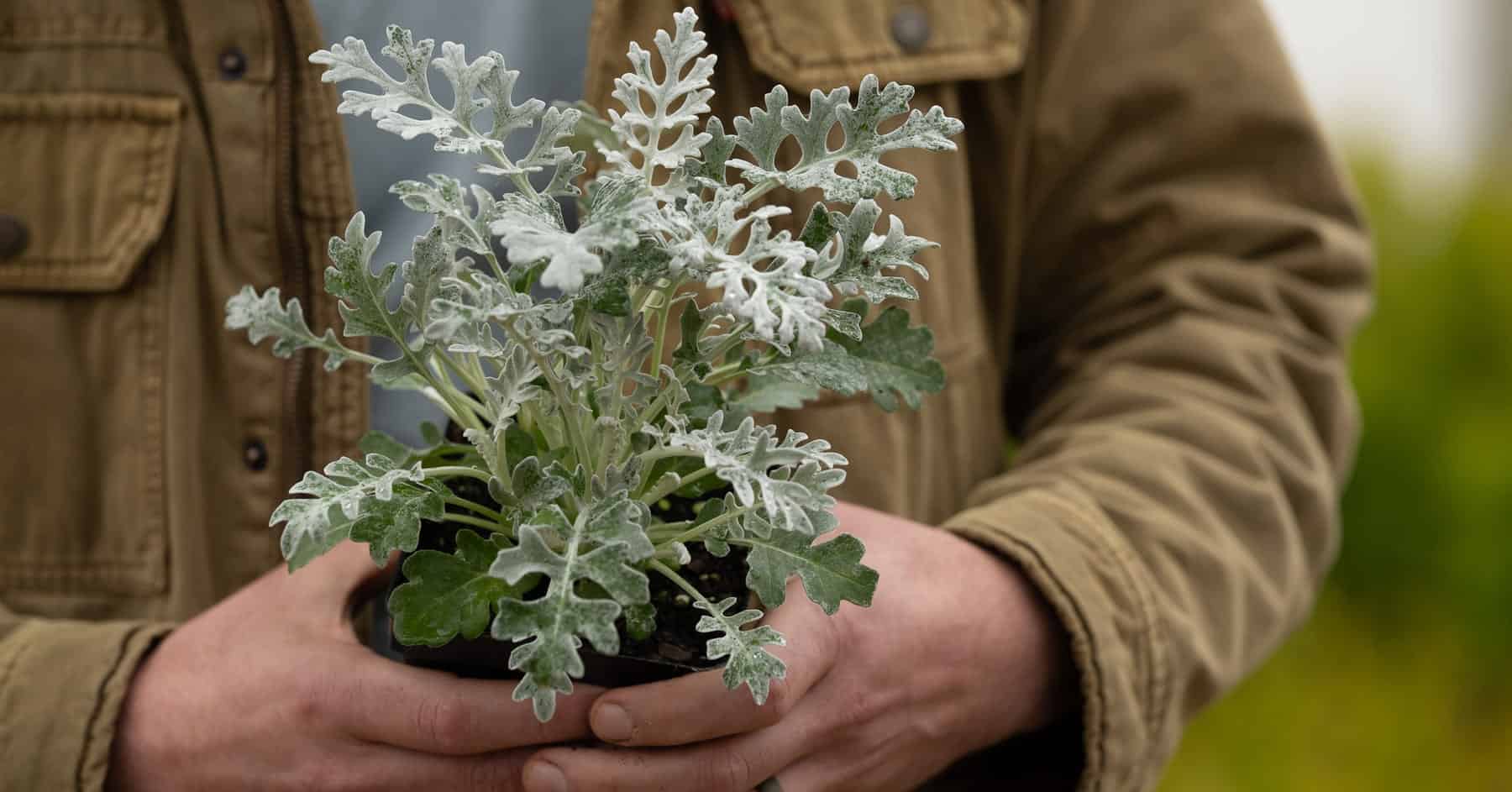
Dusty Miller
Dusty miller has soft, woolly silver foliage that deer tend to avoid. Its neutral color also makes it an excellent foliage plant for combining with nearly any spring color palette.
Tricolor Sage
Tricolor sage has aromatic foliage variegated in green, cream, and pink. Its strong herbal scent makes it less appealing to deer, while its color adds interest even when the arrangement is not in bloom.
Boxwood
Boxwoods provide structure, height, and classic evergreen foliage. They are generally considered one of the more dependable deer-resistant shrubs and can serve as an anchor in a spring planter or year-round container.
Verbena
Verbena produces clusters of colorful flowers and has foliage that deer often pass over in favor of more tender plants. Trailing varieties are especially useful around the edges of containers.
Snapdragons
Snapdragons bring vertical flowers and bright spring color to planters. They are not usually among a deer’s first choices, although tender new flowers may occasionally be sampled.
Sweet Alyssum
Sweet alyssum forms a low carpet of tiny, fragrant flowers. It works beautifully near the edge of spring containers and is generally less attractive to deer than many other soft flowering annuals.
Salvia
Salvia is one of our favorite plants for deer-prone properties. Its aromatic foliage is typically unappealing to deer, while its upright flower spikes add height and attract pollinators.
Deer-Resistant Plants for Summer Containers
Summer planters have more time to grow full and lush, so deer damage can be particularly disappointing. Fortunately, several heat-tolerant summer plants also have characteristics deer tend to dislike.
Lantana
Lantana is a strong summer performer with clusters of colorful flowers and aromatic, slightly rough foliage. Deer generally avoid it, while butterflies and other pollinators are drawn to its blooms.
Lantana performs best in sunny locations and becomes increasingly impressive as the summer progresses.
Euphorbia
Ornamental euphorbia produces clouds of delicate white flowers that soften a container planting. Its milky sap and natural characteristics generally make it unappealing to deer.
Because the sap can irritate skin and eyes, euphorbia should be handled carefully when planting or pruning.
Persian Shield
Persian shield is grown for its iridescent purple and silver foliage. Its bold leaves provide dramatic color in both sun and partially shaded containers, and deer do not typically prefer it.
Ageratum
Ageratum produces soft clusters of blue, purple, or white flowers. Its fuzzy, aromatic foliage can make it less desirable to deer than many other flowering annuals.
Verbena
Verbena remains a useful option in summer planters because it tolerates heat, flowers consistently, and is not typically a preferred deer food. It is especially effective in sunny containers where it can trail naturally over the edge.
Deer-Resistant Plants for Fall Containers
Fall is an active season for deer, and seasonal planters can become an easy target as other food sources begin to change. We use several durable, late-season plants that combine autumn color with some natural resistance to browsing.
Black-Eyed Susan
Black-eyed Susans provide warm yellow and gold flowers that fit naturally into fall color palettes. Their somewhat coarse foliage makes them less appealing to deer than many softer-leaved plants.
Marigolds
Marigolds have a distinctive scent that deer often avoid. Their yellow, orange, and rust- colored flowers also make them a natural choice for traditional fall arrangements.
Coneflowers
Coneflowers have sturdy stems, textured foliage, and prominent central cones. Deer tend to avoid established plants, although new growth may occasionally be sampled.
Asters
Asters provide abundant daisy-like flowers in shades of purple, blue, pink, and white.
They are generally considered deer-resistant and offer valuable late-season color.
Sedums
Sedums have thick, succulent foliage that deer do not typically prefer. Upright fall- blooming varieties provide strong structure and muted pink, burgundy, or rust-colored flower heads as the season progresses.
Why Deer-Resistant Planters Still Need Monitoring
Even a carefully designed deer-resistant planter may need additional protection.
A deer may pull a plant out of the soil without eating it, sample a new flower, or damage an arrangement while investigating it. Rabbits, squirrels, chipmunks, and groundhogs can also disturb containers, making it difficult to identify the culprit based on the damage alone.
Check newly installed planters regularly during the first several weeks. Early signs of browsing include:
- Ragged or torn foliage
- Missing flowers or growing tips
- Plants pulled partially out of the soil
- Hoofprints near the containers
- Damage that appears suddenly overnight
Reapplying repellent at the first sign of activity can prevent a curious visit from becoming a regular feeding pattern.
Deer-Resistant Container Planting on the Philadelphia Main Line
Enliven Planters designs, installs, and maintains seasonal planters and window boxes throughout Philadelphia and the surrounding suburbs.
When we know a property experiences significant deer activity, our designers can prioritize plants that deer tend to avoid while still creating an arrangement with the color, texture, scale, and seasonal interest associated with an Enliven design.
Deer-resistant planting is not about settling for a limited or unattractive selection of plants. With thoughtful design, it is possible to create full, colorful containers using fragrant herbs, textured foliage, structural evergreens, flowering annuals, and durable perennials.
The strongest approach combines:
- Thoughtful plant selection
- Consistent repellent applications
- Regular monitoring
- Prompt action when browsing begins It may not make your planters completely deer-proof, but it can make them considerably less inviting.
Frequently Asked Questions About Deer-Resistant Planters
What container plants do deer dislike?
Deer often avoid plants with strong fragrances, fuzzy or coarse foliage, bitter flavors, irritating sap, or thick succulent leaves. Examples include salvia, sage, dusty miller, lantana, euphorbia, marigolds, boxwood, and sedum.
Will deer eat plants on a porch?
Yes. Deer may approach planters beside front doors, on low porches, along walkways, or near garages. Containers placed close to the house are not automatically protected, particularly in neighborhoods with established deer populations.
Do deer eat window-box plants?
They can reach lower window boxes, especially on row homes, ranch homes, garden- level windows, and raised terraces. Higher window boxes are generally less accessible, although other animals may still cause damage.
What is the best deer repellent for planters?
Look for a product labeled for use on ornamental plants that combines odor and taste deterrents. Formulas containing putrescent egg solids, capsaicin, garlic, or similar ingredients are common. The best product is one that is safe for the intended setting and reapplied according to its label.
How often should deer repellent be applied?
Application schedules vary by product. Many need to be reapplied periodically and after significant rainfall. Follow the manufacturer’s label rather than relying on a universal schedule.
Are deer-resistant plants also rabbit-resistant?
There is some overlap, particularly among plants with aromatic, fuzzy, coarse, or irritating foliage. However, deer and rabbits do not always avoid the same plants. A combination of resistant plant choices, repellents, and observation offers the best protection.
Can Enliven design planters for a property with deer?
Yes. Let us know if deer browsing is a recurring concern at your property. Our designers can prioritize less-preferred plants and recommend additional precautions based on the season, location, sunlight, and style of your containers.