
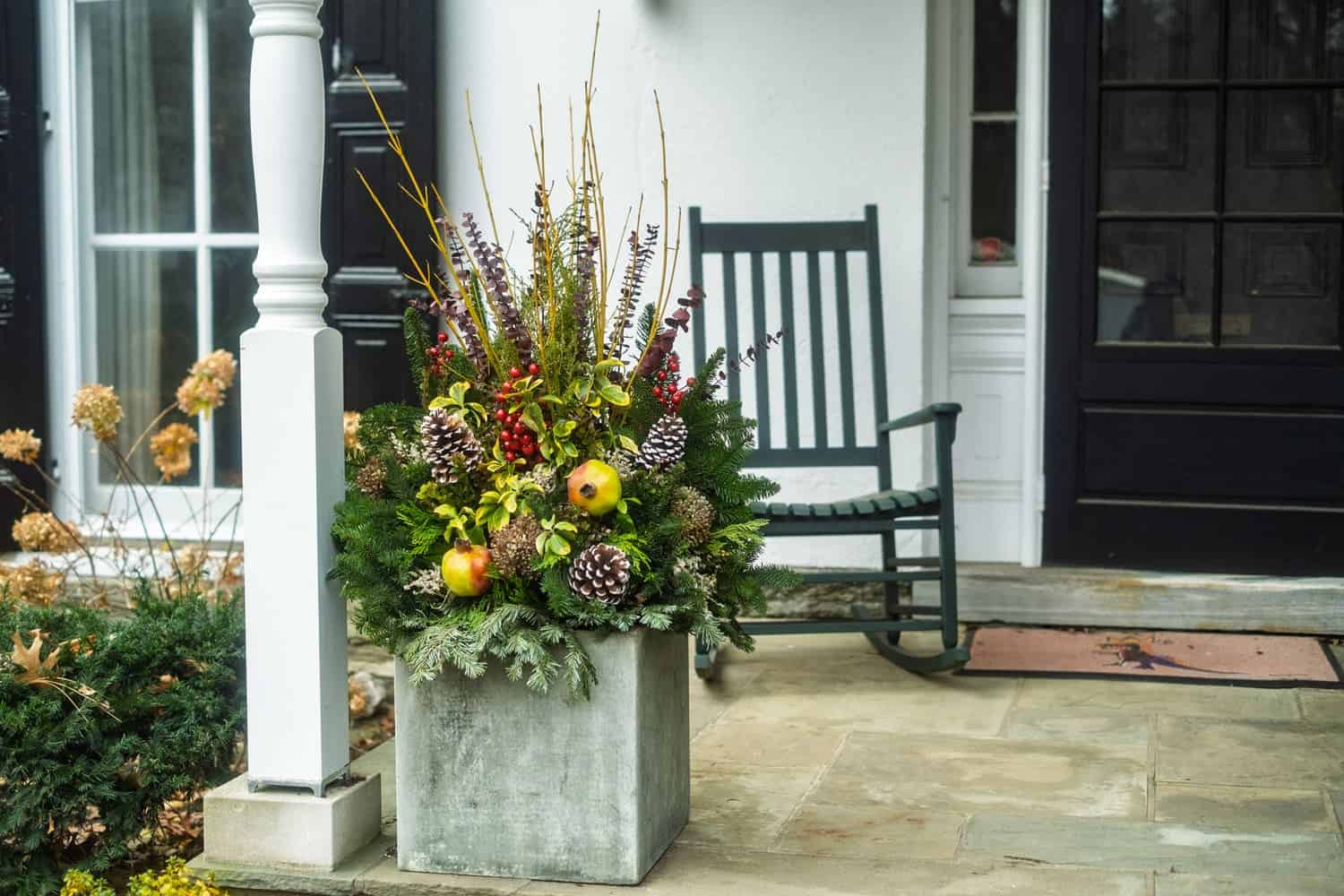
Winter Planters and Window Boxes: Designing Arrangements That Survive Everything
Winter is our most unique season—and without question, our most challenging.
In spring, summer, and fall, we work with living plants fresh from greenhouses and growers’ fields. Winter, especially here in Philadelphia, is a completely different animal. This season demands a deeper level of planning, material knowledge, and experience than any other time of year. We use cut and preserved materials rather than living plants.
We begin planting winter arrangements in November, and they need to remain beautiful until March. That’s four months of exposure to just about every condition imaginable: 60-degree days followed by sub-zero nights, relentless wind, snow and ice, heavy rain, harsh winter sunlight, and endless freeze–thaw cycles that punish both plants and materials.
This winter has been a perfect reminder of why winter design is where true expertise shows.
Fifteen Winters of Lessons (Learned the Hard Way)
Over the last 12 years at Enliven, we’ve experienced every version of winter you can imagine.
We’ve planted in T-shirts and jeans during the first week of December, sweaty and muddy as if it were June. We’ve also planted with pick axes, hand warmers, and heavy winter coats, breaking through soil frozen into solid blocks of ice. We’ve seen February hit 80 degrees (2018 still stands out), and we’ve worked through stretches of bitter negative temperatures.
Our winter arrangements have to be ready for all of it—because winter is unpredictable.
First Impressions Matter—But So Does Longevity
Winter arrangements serve a unique dual purpose.
First, they’re often the first impression of the holiday season. This is the most common time of year for hosting guests, and people want their homes looking polished and intentional before company arrives.
At the same time, those arrangements must age gracefully. There’s nothing worse than a display that screams “holiday décor left up too long.” The goal is to strike a balance: festive enough for December, timeless enough to still look appropriate in February.
That balance comes down to materials—and knowing exactly how they behave over time.
The Backbone: Evergreen Boughs Built for Winter
Our winter designs begin with cut and preserved evergreen boughs sourced from the Pacific Northwest. We primarily use noble fir and silver fir, sustainably harvested high in the mountains of Oregon and cut fresh for the season.
These boughs are dipped in an organic tree resin that helps preserve both color and moisture content for as long as possible. This isn’t guesswork—we’ve spent over a decade experimenting with suppliers and methods to find what truly performs best through freeze–thaw cycles.
Supporting greens include:
- Huckleberry, with brilliant orange, red, and green foliage on rich red stems
- Oregonia, offering creamy whites, golds, and greens
- Incense cedar, with soft yellow tips
- Variegated and coned cedar
- Blue-berried juniper
- Carolina sapphire cedar, prized for its striking powder-blue foliage. Each material is chosen not just for beauty, but for how it ages outdoors.
Texture, Height, and Structure: Cones, Eucalyptus, and Dried Florals
Pine cones are harvested during the warm summers in the forests of North Carolina and stored specifically for winter use. They add texture, scale, and a sense of seasonality without degrading over time.
Eucalyptus is cut and preserved along the warm California coast, harvested at the precise moment when new growth has hardened off. This timing is critical. Preserved correctly, eucalyptus can be dyed deep, rich tones that add height, movement, and depth to winter designs.
We also incorporate dried flowers grown up and down the West Coast. These bring a light, airy quality and a floral softness—often in whites and creams—that lasts the entire season without collapsing or discoloring.
Twigs That Stop You in Your Tracks
Brilliantly colored twigs are one of the easiest ways to add color and height to an arrangement.
Harvested just after leaves drop in October, we use dozens of varieties: curly willow, red twig dogwood, yellow dogwood, and more. Most are cut in the Upper Peninsula of Michigan and parts of Ontario, where cold conditions produce strong color and structure.
These elements create height, drama, and architecture—giving winter arrangements presence even when viewed from a distance.
Why We Use Artificial Berries (And Why That’s Intentional)
Fresh berries are beautiful—but in practice, they’re unreliable.
Over the years, we learned that farm-grown fresh berries come with major drawbacks:
- Limited color variety compared to what exists in nature
- Unpredictable harvests due to weather and bird damage
- Shipping losses that could exceed 50% of the product
- Freeze–thaw cycles that cause berries to blacken or drop
- Birds stripping arrangements bare during cold winters
Rather than fight nature, we designed a better solution.
We develop our own artificial berries to mimic what we see outdoors. We work with artists and designers to refine size, branching patterns, berry shape, color, sheen, and density. Every year, we improve this collection—expanding our library so it feels natural, intentional, and timeless.
A Season That Starts a Year in Advance
All of these elements come together in our winter arrangements—but the work begins long before November.
Winter design is a year-long endeavor: testing materials, refining suppliers, improving techniques, and learning from every season. It’s demanding, unforgiving work—but when everything comes together, the results speak for themselves.
Winter may be the harshest season, but it’s also the one that best reveals creativity and craftsmanship. And after 12 winters, it’s one we’ve learned to respect—and design for—better than ever.