
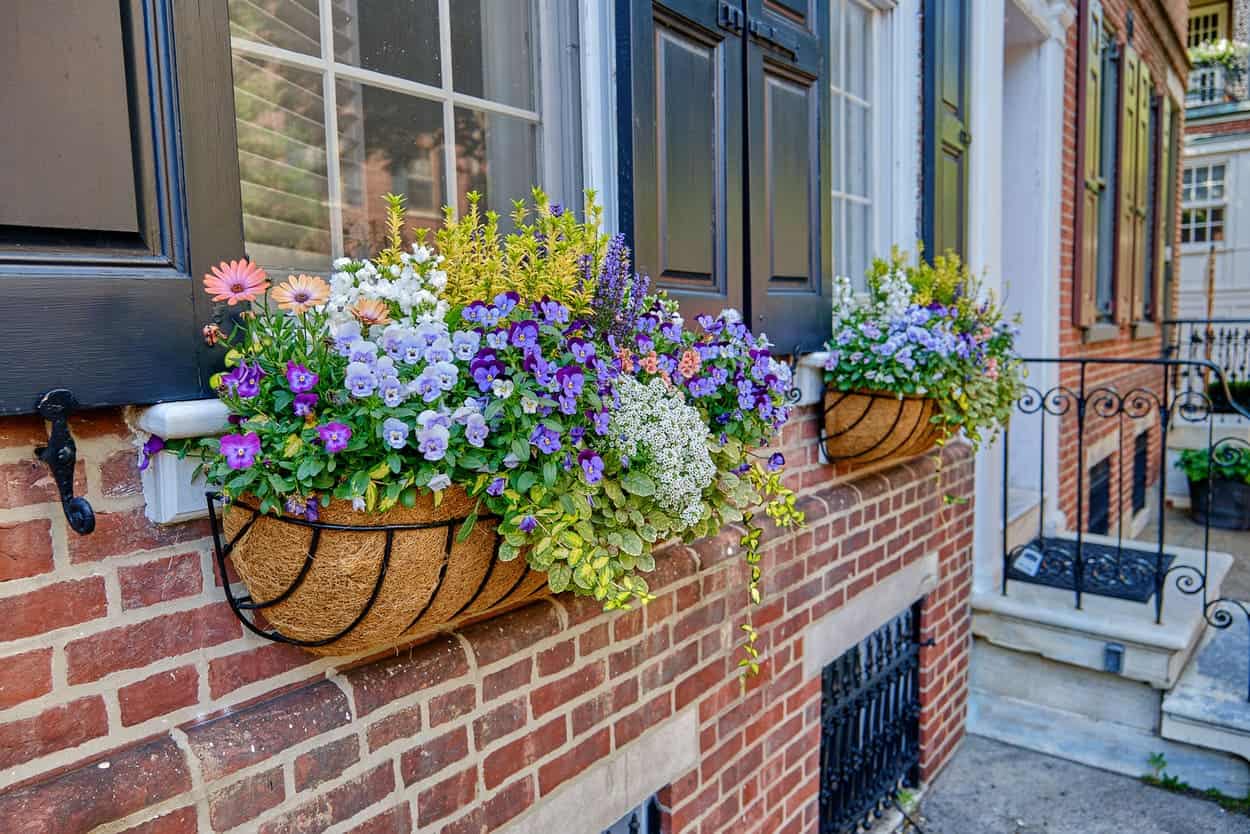
Spring Window Boxes in Old City and Society Hill: Philadelphia’s Colonial Tradition in Bloom
Window boxes may feel decorative today, but in Philadelphia, they began as something much more essential.
In colonial cities like Philadelphia, Boston, and Williamsburg, window boxes were practical, hardworking elements of daily life. Long before modern sanitation or air filtration, early urban environments were crowded, noisy, and often unsanitary. Homes were built close together, streets were narrow, and fresh air was precious.
Window boxes—filled with fragrant herbs, flowering plants, and greenery—were placed beneath windows to help filter unpleasant odors, improve air quality, and bring nature closer to daily life. In many ways, Philadelphia and other colonial cities became the birthplace of the window box tradition we still cherish today.
Nowhere does that history feel more alive than in Old City and Society Hill.
Colonial Architecture That Shaped a Tradition
Old City and Society Hill are some of Philadelphia’s most historically intact neighborhoods, home to brick residences built during the 18th century, many dating back
to Colonial America and the Revolutionary era. Cobblestone streets, symmetrical façades, multi-pane windows, shutters, and paneled doors define the neighborhood’s timeless character.
These homes were designed with proportion and intention—and window boxes were a natural extension of that design. Even centuries later, it’s easy to imagine early residents opening their windows to let in fresh air scented with herbs and flowers growing just outside.
Planting Philadelphia window boxes here feels less like adding something new and more like continuing a tradition.
Traditional Window Boxes and Historic Color Palettes
Today, many of our Old City and Society Hill clients live in historic homes, and our approach to planting reflects that responsibility. The most common installation here is a traditional wooden window box, carefully painted to match the historic colors of the home.
It’s common to see doors, shutters, and window boxes all painted in the same thoughtfully selected shade—soft blues, pale greens, muted yellows, warm creams, and gentle pastels that feel true to the period. In spring, these paired window boxes become one of the defining visual elements of the neighborhood.
Pastel seasonal plantings soften the brick façades and frame the windows, echoing the colors of early spring while honoring the restrained elegance of colonial design.
Spring Planting Among Revolutionary History
While planting in Society Hill, it’s impossible not to slow down. The craftsmanship of these homes—the brickwork, iron details, and aged stone—invites attention. With Independence Hall and other Revolutionary landmarks just steps away, the neighborhood still carries the energy of early American city life.
It isn’t hard to imagine the sights and sounds that once filled these streets: footsteps on cobblestone, voices drifting through open windows, the everyday bustle of a young city finding its rhythm.
Spring window boxes add a living layer to that history—reminding us that plants have always been part of how people experienced their homes.
A Living Link to Philadelphia’s Past
In Society Hill, Philadelphia window boxes are more than decoration. They are a living link to the city’s colonial past—rooted in practicality, elevated by beauty, and sustained by tradition.
Our goal is always to design window boxes that feel appropriate, timeless, and deeply connected to the architecture they serve. Simple. Balanced. Seasonal.
In spring, when pastel plantings frame brick homes along cobblestone streets, Society Hill shows us that some ideas are worth carrying forward—century after century.