
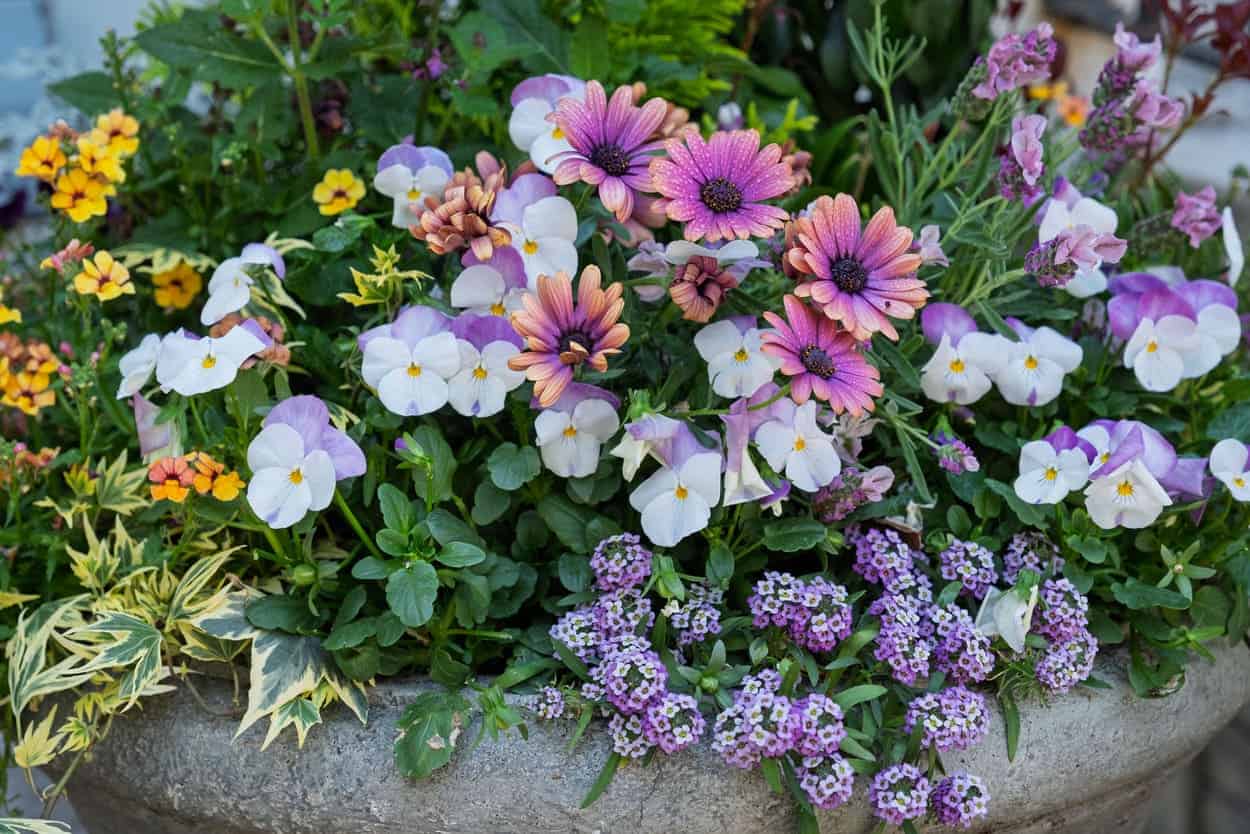
Why Mixed Containers Work — and What Really Makes Them Last
A great container isn’t built on a single moment of color.
At Enliven, we’ve spent more than a decade refining mixed container designs—iterating on thousands of planters every season. What we’ve learned is simple: the containers that stand out visually are almost always the ones designed to perform over time, not just look good the day they’re planted.
This post is a look behind the scenes at how we think about container gardening—and why a well-designed mixed container is so much more than “that looks colorful right now, let’s plant it.”
What Makes Mixed Containers Visually Strong
Mixed containers work because they create contrast and rhythm.
Instead of relying on one type of plant or one burst of bloom, strong containers layer:
- Different foliage sizes and textures
- Upright, mounding, and trailing growth habits
- Plants that peak at different points in the season
The result is depth. Your eye moves through the container instead of landing on one flat plane of color.
When done properly, mixed containers feel intentional from every angle—and they continue to evolve as the season progresses.
Why Mixed Containers Last Longer
Longevity is where thoughtful container design really shines.
A container made entirely of plants chosen for peak bloom often looks incredible for about a week. Once those blooms fade or cycle out, the container loses its structure and energy.
Mixed containers are designed with:
- Structural plants that anchor the arrangement
- Foliage plants that hold their form all season
- Blooming plants that come in waves
If one plant slows down, another picks up the slack. The container never fully drops off. That’s not an accident—it’s planning.
Ten+ Years of Testing (So You Don’t Have To)
At Enliven, we focus exclusively on container gardening. That gives us a rare advantage: we’re not tied to any single breeder, grower, or formula.
Over the years, we’ve tested just about every variable you can imagine:
- Full-sun roof decks hitting 100+ degrees
- Deeply shaded, north-facing porches
- Customers who water daily—and customers who leave for the shore every weekend
- Irrigated containers, self-watering containers, and hand-watered pots
- Dozens of soil blends
- Hundreds of plant varieties, sizes, textures, and growth habits
If there’s a factor that affects container performance, we’ve likely tested it—often more than once.
Performance Comes First (Beauty Follows)
We don’t start with bloom color. We start with plant behavior.
Before a plant earns its place in an Enliven container, we look at:
- How it grows over time
- How it responds to heat, stress, and inconsistent watering
- How it pairs with other plants
- Whether it holds its shape or collapses mid-season
Only then do we refine color palettes, textures, and combinations.
A well-planted container works like an orchestra: there are moments for solos, slow builds, and full crescendos—then quieter passages that let the design breathe. When done right, the container ebbs and flows instead of peaking once and fading fast.
Why DIY Container Gardening Can Be Tough
I still remember my first container arrangement. It was… bad.
And that’s not because I didn’t care—it’s because most beginner gardeners (and honestly, many professionals) are taught to shop with their eyes in the moment.
Garden centers and big box stores are filled with plants bred and grown to look perfect during a very specific window. Many are essentially raised in laboratory-like conditions: controlled light, precise fertilization, ideal temperatures, and perfect watering schedules.
Then they’re taken home—and dropped into the wild.
Suddenly they’re dealing with:
- Irregular watering
- Little to no fertilizer
- Rain, wind, heat waves, and cold snaps
- Sun exposure that doesn’t match their preference
It’s no wonder so many containers disappoint after a week or two.
The Problem With “Instant Color” Containers
Pre-made baskets and single-variety mixes (three colors of petunias, for example) are designed to sell at peak bloom—not to perform long term.
They often:
- Look their best the day they leave the greenhouse
- Decline quickly once blooms fade
- Lack structure once flowering slows
- Never regain the impact they had at purchase
There’s nothing wrong with choosing a healthy plant—but great container design asks you to look beyond the bloom.
Designing for the Whole Season
The most effective containers are built around:
- Foliage first
- Structure second
- Blooms as accents, not the foundation
When you design this way, containers become more forgiving, more resilient, and far more satisfying to live with.
That’s the difference between cobbling together plants based on what looks good today— and building a container that still looks intentional six weeks from now.
Ride Along With Us
This blog is an invitation behind the scenes.
We want you to understand why Enliven containers work, not just admire the finished result. Whether you’re a client or a DIY gardener, our goal is to share the principles that make container gardening more successful—and far less frustrating.
Because when you design for performance first, beauty follows naturally. And that’s when containers truly come to life.